
Average VA Mortgage Interest Rate: What to Compare First
The average VA mortgage interest rate depends on the survey and the date you check. In September 2026, major rate trackers placed the average 30-year fixed VA rate between 6.64% and 7.17%, while the national average APR was 6.71% as of September 15. Your offered rate may be lower or higher based on your credit, debt-to-income ratio, loan term, discount points, and lender.
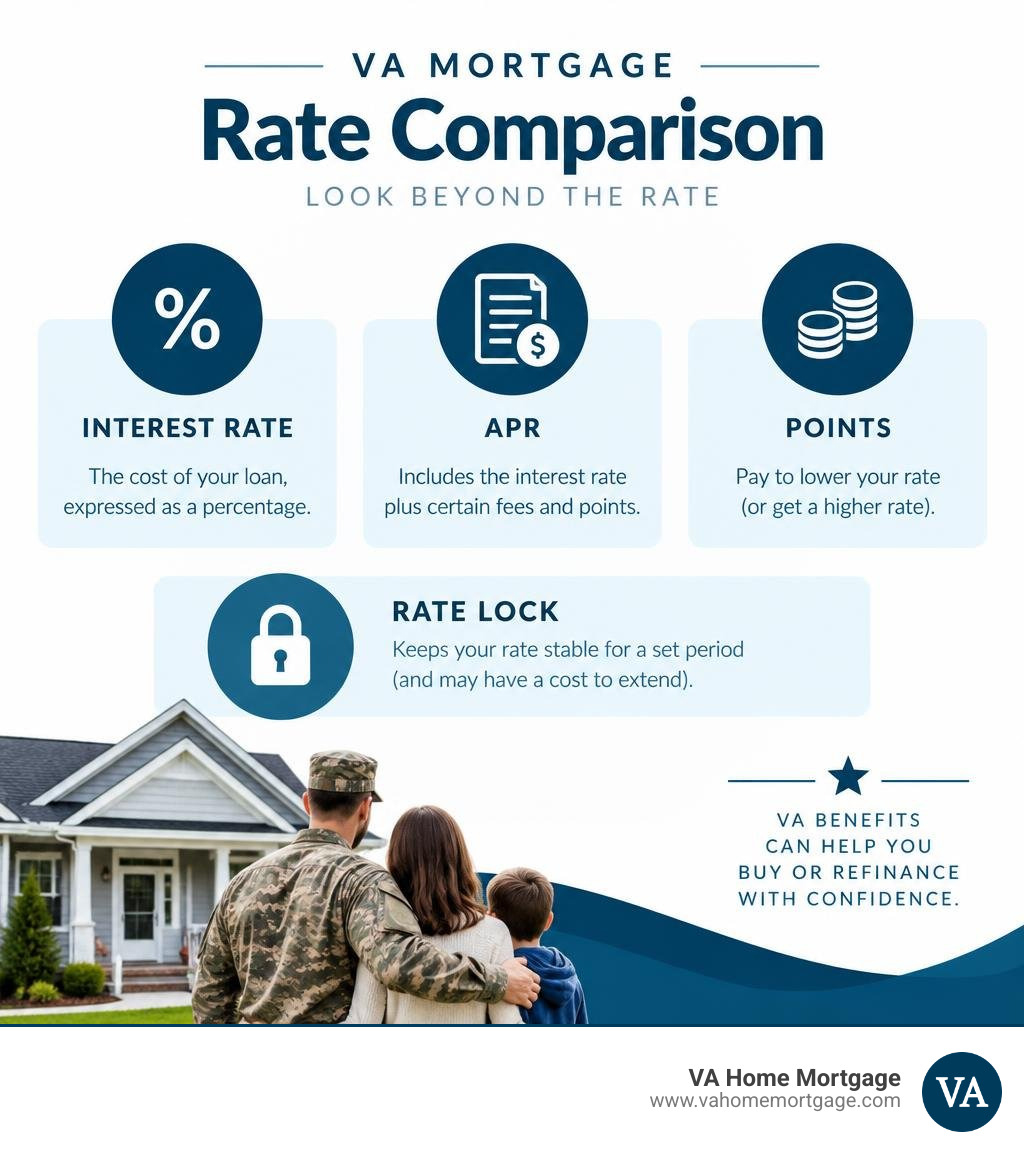
For a useful comparison, do not stop at the advertised rate:
- Compare at least three VA lender quotes on the same day.
- Review the APR, which includes certain fees and points.
- Ask about the rate-lock period and any cost to extend it.
- Factor in VA benefits such as zero down payment and no monthly private mortgage insurance.
VA rates can move quickly, and the VA does not set them. Private lenders set pricing based on market conditions, while the VA guaranty can help eligible borrowers qualify with competitive terms and less cash needed at closing.
I’m Dale Gremillion, a Senior Loan Officer and Producing Branch Manager with more than 25 years of residential lending experience. I help veterans and military families understand the average VA mortgage interest rate, compare real loan costs, and build practical purchase or refinance plans.
Average va mortgage interest rate terms you need:
- current 30 year va mortgage rate
- va home loan refinance
- va home refinance rate
Current Average VA Mortgage Interest Rate Benchmarks in 2026

Navigating the mortgage market in September 2026 requires understanding the broader economic forces at play. Mortgage rates have experienced notable shifts over the past few years, influenced by broader inflation metrics, Federal Reserve policies, and bond market movements. As a veteran or active-duty service member, you have access to one of the most powerful home loan programs available, but tracking day-to-day market conditions remains essential.
When looking at national benchmarks, daily surveys provide critical insights into where pricing sits. For example, tracking current economic data and rate changes reveals how indices like Optimal Blue and daily market surveys capture rate movements. In late September 2026, the 30-year fixed VA rate hovered near 6.81% on September 24 and reached 7.17% on September 25, reflecting a year-over-year increase of roughly 1.09%. Earlier in the summer, rates had dipped near 6.05% in July, highlighting how quickly the lending environment can shift.
A primary driver behind daily mortgage pricing is the 10-year U.S. Treasury yield. When Treasury yields climb due to economic growth or persistent inflation expectations, mortgage rates generally follow suit. Conversely, when yields drop, borrowing costs often ease. By understanding current 30-year VA mortgage rates today, you can evaluate where current pricing sits relative to historical ranges and position your purchase or refinance strategy accordingly.
Purchase Loan Rates vs. Refinance Rates
Mortgage rates often differ depending on whether you are buying a home or refinancing an existing mortgage. In general, purchase loan rates can run slightly lower than certain refinance products, though specialized government programs offer substantial advantages.
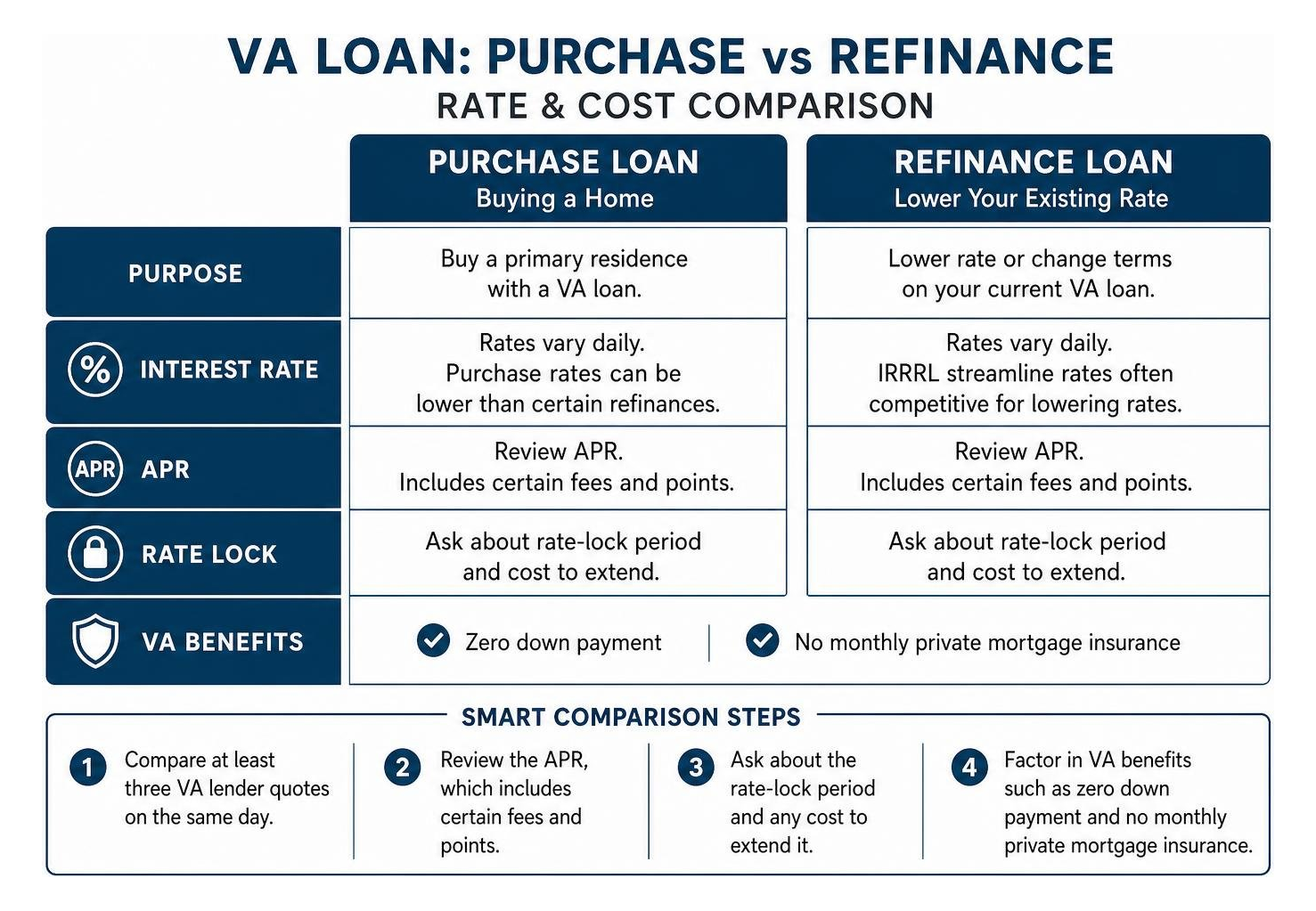
When refinancing, eligible military homeowners frequently turn to the Interest Rate Reduction Refinance Loan (IRRRL). An IRRRL—also known as a VA streamline refinance—allows you to lower your monthly interest rate with minimal underwriting, no appraisal in most cases, and reduced closing costs. In contrast, a cash-out refinance involves accessing home equity, which carries slightly different risk pricing and closing fees. For an in-depth breakdown of these strategies, explore the ultimate guide to VA home mortgage refinancing.
Fixed-Rate VA Mortgages
Fixed-rate mortgages remain the standard choice for military buyers looking for long-term stability. With a fixed rate, your principal and interest payment remains identical every month for the entire life of the loan, protecting your household budget from unexpected market increases.
The two most common terms are:
- 30-Year Fixed VA Loan: Offers the lowest monthly payment by spreading amortization over three decades, maximizing your purchasing power.
- 15-Year Fixed VA Loan: Carries a lower base interest rate—often 0.50% to 0.75% below 30-year rates—and builds home equity at a much faster pace, though monthly payments are noticeably higher.
Whether you choose a standard or jumbo loan amount, understanding how 30 year fixed VA jumbo mortgage rates really work can ensure you maximize your VA entitlement without overpaying on interest.
Key Factors That Determine Your Personal VA Rate
While national averages provide a snapshot of the general market, your individual interest rate will depend on specific financial characteristics. Lenders evaluate baseline secondary market conditions before applying risk-based adjustments.
Broader economic drivers dictate the wholesale cost of funds. However, when evaluating overall loan terms and market conditions, individual lender margins and borrower credentials create the final pricing quote. It pays to compare current VA mortgage rates and loan terms across different scenarios to see how each parameter influences your bottom line.
How Credit Scores Impact the Average VA Mortgage Interest Rate
Although the Department of Veterans Affairs does not set a mandatory minimum credit score, private lenders establish their own underwriting guidelines, known as lender overlays.
Borrowers with credit scores above 740 typically qualify for the lowest rates and best discount terms. Scores between 660 and 720 generally receive competitive market rates, while scores below 640 may see interest rate adjustments of 0.50% to 1.00% higher. In addition to credit scores, lenders assess your debt-to-income (DTI) ratio. Maintaining a DTI below 41% ensures smooth underwriting approval and strengthens your rate tier.
Loan Term, Discount Points, and Down Payments
You can customize your financing structure to achieve a lower rate using several practical tools:
- Repayment Term: Opting for a 15-year fixed loan inherently secures a lower interest rate compared to a 30-year loan.
- Discount Points: Paying discount points upfront—where one point equals 1% of the loan balance—allows you to buy down your interest rate. Conducting a break-even calculation helps determine whether upfront costs outweigh the monthly payment reduction over your expected time in the home.
- Optional Down Payment: Even though VA loans offer a 0% down payment feature, putting down 5% or 10% can lower your base loan amount and reduce the one-time VA funding fee.
How to Secure the Lowest Possible VA Mortgage Rate

Securing the best possible financing requires an active shopping strategy rather than accepting the first quote you encounter. Taking structured steps before and during the application stage can lead to significant lifetime savings.
To begin, research trusted mortgage professionals by finding low VA mortgage rates and lenders in your area. Knowing your timeline is equally important; understanding everything to expect from your VA loan closing timeline ensures you do not encounter unexpected rate-lock expirations while underwriting is underway.
Comparing Lenders and Loan Estimates
Every lender must provide a standardized three-page Loan Estimate within three business days of receiving your completed application. This document details the exact terms and costs of the proposed financing.
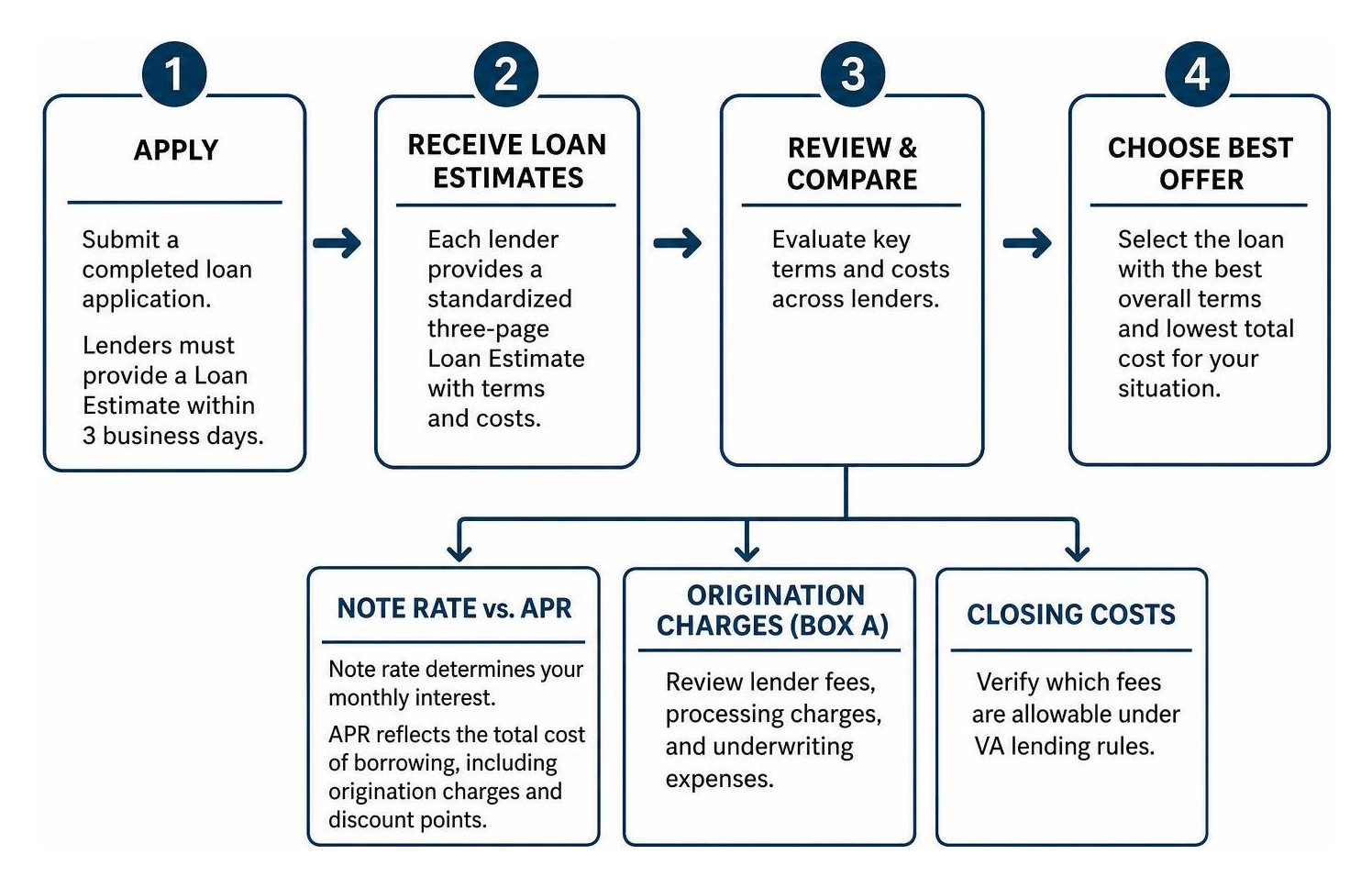
When reviewing options from top VA mortgage lenders to fit your needs, examine:
- The Note Rate vs. the APR: The note rate determines your monthly interest, while the Annual Percentage Rate reflects the total cost of borrowing, including origination charges and discount points.
- Origination Charges (Box A): Check lender fees, processing charges, and underwriting expenses.
- Closing Costs: Consult a practical guide to understanding VA loan closing costs to verify which fees are allowable under VA lending rules.
When to Lock Your Interest Rate
A mortgage rate lock guarantees that your quoted interest rate will not change before closing, provided your loan closes within a specified period (typically 30, 45, or 60 days).
In volatile economic environments, securing a rate lock as soon as your purchase contract is accepted prevents unexpected rate increases. Some lenders offer float-down provisions, allowing you to capture a lower interest rate if market conditions improve prior to closing.
Frequently Asked Questions About VA Loan Interest Rates
What is the average VA mortgage interest rate in 2026?
As of September 2026, the national average 30-year fixed VA mortgage interest rate ranges between 6.64% and 7.17%, depending on the specific daily index and lender survey data. Overall VA APR averages sit around 6.71%. Individual rates vary based on credit profile, loan structure, and down payment.
Does the Department of Veterans Affairs set mortgage rates?
No. The Department of Veterans Affairs does not set mortgage rates, nor does it lend money directly to home buyers. Private lenders, banks, and mortgage companies set their own interest rates based on market conditions, Treasury yields, and secondary market demand. The VA provides a loan guaranty that backs a portion of the loan balance, reducing lender risk and allowing lenders to offer lower rates than conventional alternatives.
Can I lower my VA mortgage interest rate after closing without a full refinance?
Some lenders offer internal rate renegotiation or modification options for a nominal administrative fee. However, the most common and standardized method for reducing your rate after closing is through a VA Interest Rate Reduction Refinance Loan (IRRRL). An IRRRL requires minimal documentation and allows you to transition into current lower market rates quickly.
Conclusion
Securing a favorable mortgage rate can save tens of thousands of dollars over the lifetime of your loan. While national benchmark averages provide a helpful guide, your personal rate depends on your credit profile, your loan terms, and the lender you choose.
At Capital Home Mortgage, we take pride in serving those who served. As a direct VA mortgage lender with in-house underwriting and direct lending authority, we streamline the approval process and offer fast, zero-down-payment, no-PMI financing tailored to your financial goals. Whether you are buying your first home or looking to lower your monthly payments through an IRRRL refinance, explore tailored VA home financing solutions with our experienced lending team today.


